
 By kazimladimeji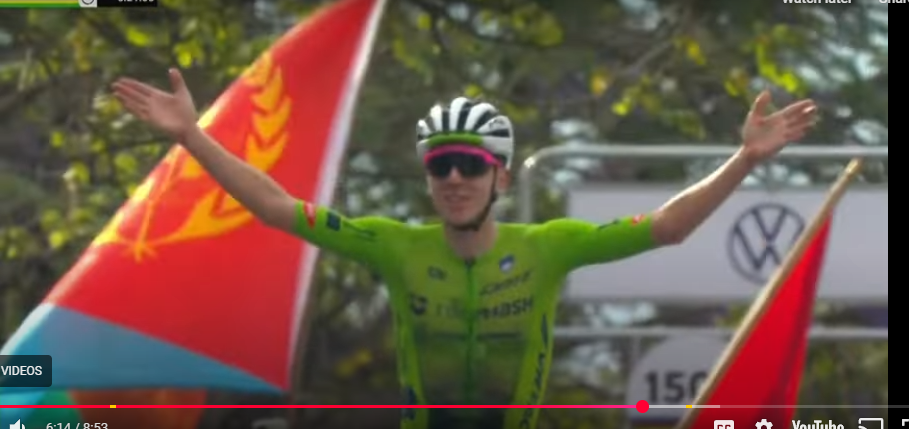
The Tour de France is more than a race — it’s a century-old cultural event, a rolling festival of endurance, strategy and spectacle that captures global attention every July.
From its beginnings as a publicity stunt to its status as the world’s premier sporting endurance test, the Tour has shaped the story of professional cycling itself.
🏁 A Race Born from Rivalry
The first Tour de France took place in 1903, organised by newspaper L’Auto as a circulation-boosting stunt.
Just 60 riders set off from a café in Montgeron, south of Paris, facing six massive stages that totalled more than 2,400 kilometres — much of it on unpaved roads.
Frenchman Maurice Garin won that inaugural edition, riding through the night on a steel bike weighing nearly 20 kg. His victory captured the public imagination, and the Tour became an annual fixture almost immediately.
Through two world wars, economic crises and generations of change, the Tour has endured — evolving from a test of survival to a meticulously planned global event broadcast to millions.
🚴 The Essence of the Tour
Each edition of the Tour de France covers roughly 3,300–3,500 km over three weeks, looping across France and occasionally visiting neighbouring countries.
Riders tackle every type of terrain imaginable: cobbles in the north, windswept coastal roads, rolling central plateaus, and towering Alpine and Pyrenean climbs.
The overall leader on time wears the famous yellow jersey (maillot jaune) — introduced in 1919 so spectators could spot the race leader instantly.
Other jerseys were added later: the green jersey for points (sprinters), the polka-dot for the mountains classification, and the white jersey for the best young rider.
Those colours have become icons of cycling, and the daily battle to defend or claim them defines the rhythm of the race.
🏔️ The Mountains That Made the Race
If the Tour de France has a soul, it lies in its mountains.
The first major climb, the Col du Tourmalet, appeared in 1910 — a move the organiser described as “insane” at the time. It transformed the race, elevating it from endurance contest to heroic struggle.
Since then, the names of certain climbs have become synonymous with glory and suffering:
-
Alpe d’Huez — 21 hairpins carved into the Alps, packed with roaring fans every July.
-
Mont Ventoux — the “Giant of Provence,” a barren moonscape where heat and wind destroy the unprepared.
-
Col du Galibier — one of the Tour’s highest and most spectacular summits.
-
Tourmalet and Peyresourde — icons of the Pyrenees, decisive in countless battles for yellow.
-
La Planche des Belles Filles — a modern classic where several Tours have been won or lost by seconds.
These climbs are more than obstacles — they’re the living amphitheatres of the sport, where legends are made and myths endure.
🏆 Legends of the Tour
Across more than a century, the Tour has crowned some of cycling’s greatest champions — each era defined by its dominant rider.
-
Jacques Anquetil (France) — the first to win five Tours, famed for his time-trial mastery.
-
Eddy Merckx (Belgium) — “The Cannibal,” who devoured every classification in sight, winning five Tours and 34 stages.
-
Bernard Hinault (France) — fierce, proud and aggressive; France’s last home winner, with five titles between 1978 and 1985.
-
Miguel Induráin (Spain) — cool precision and power, claiming five consecutive victories in the 1990s.
-
Chris Froome (Britain) — tactical brilliance and climbing prowess delivered four wins for Team Sky in the 2010s.
Many others — from Greg LeMond and Alberto Contador to Tadej Pogačar and Jonas Vingegaard — have added their names to the roll of honour, showing how the Tour constantly renews itself while respecting its past.
🧱 Traditions That Define the Tour
Despite evolving technology and global reach, the Tour retains rituals that root it in its early 20th-century character.
-
The Caravan: Before each stage, a parade of sponsor vehicles throws merchandise to cheering crowds — a tradition since 1930.
-
The Combativity Award: Recognising the day’s most aggressive rider, celebrating spirit as much as success.
-
The Lantern Rouge: The final finisher in the general classification, often beloved for their perseverance.
-
Champs-Élysées Finish: Since 1975, the Tour’s final sprint through Paris has been one of sport’s most iconic sights.
The combination of competition and ceremony makes the Tour part sporting event, part travelling celebration of French summer life.
⚙️ Technology and Teamwork
The Tour de France began as a solo battle of man and machine; today, it’s a complex strategic war fought by highly organised teams.
Support riders (“domestiques”) shield their leaders from wind, fetch bottles, and control the pace — sacrificing their own ambitions for team success.
Meanwhile, technology has transformed performance. Lightweight carbon frames, electronic shifting, aerodynamic helmets, power meters and GPS computers are standard kit.
Even nutrition and sleep are optimised, with teams travelling in customised buses and hotels tailored for recovery.
Each innovation feeds into the same timeless goal: to ride faster, further, and smarter than the rest.
🌍 A Global Spectacle
What began as a French newspaper promotion now commands worldwide attention.
Over 3 billion television viewers tune in across three weeks, and millions line the roadside each year — from Alpine villages to Paris boulevards.
The Tour’s scenic landscapes double as a tourism showcase for France, while its global reach continues to expand professional cycling’s fan base across Europe, the US, Australia and Asia.
📚 Controversies and Comebacks
Like all long-running sports, the Tour’s history includes shadows alongside triumphs.
Doping scandals in the late 20th and early 21st centuries tarnished reputations but also drove reform.
Modern anti-doping measures, advanced testing, and a new generation of clean riders have helped restore credibility.
What remains constant is the Tour’s resilience: year after year, it reinvents itself while preserving its core drama — man versus mountain, team versus team, and ambition versus exhaustion.
🔥 The Spirit of the Tour
At heart, the Tour de France is about more than winners and records.
It’s about courage, endurance, and the human capacity to push beyond limits.
Every July, new stories emerge: an underdog’s breakaway, a climber’s heroic solo, a sprinter’s perfect lead-out, or a champion’s moment of weakness that reshapes the race.
The beauty of the Tour is that anything can happen — and usually does.
🧭 Explore More on BicycleGear.uk
If you’d like to follow how the 2025 edition unfolded, including daily highlights, bikes, and prize details, check out our companion pieces:
-
Tour de France 2025: Daily Recaps, Previews & Key Gear Picks
-
Tour de France Bikes 2025: What the Teams Are Riding & Specialist Gear
-
Early Thoughts and Reactions to the 2026 Tour de France Route
Final Word
For more than a century, the Tour de France has embodied the essence of competitive cycling — endurance, elegance, and an unyielding pursuit of greatness.
It’s a race that honours history while embracing innovation, a spectacle that continues to inspire riders and fans alike.
From the cobbles of northern France to the summits of the Alps and the finish line in Paris, the Tour remains what it has always been:
the ultimate test of strength, strategy and spirit — the greatest show on two wheels.