
 By kazimladimeji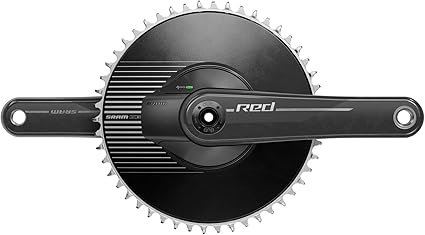
When you strip a bike down to its bare essentials, every gram counts — and nowhere is that more true than in the world of hill climbs and pure climbing machines. Enter SRAM RED 1x AXS, a minimalist drivetrain concept built for riders who crave simplicity, reliability, and absolute efficiency on steep gradients.
While the 2x setup remains dominant in road racing, more and more climbers — from local hill-climb champions to gravel pros — are turning to 1x drivetrains for their weight savings and mechanical clarity. The RED 1x AXS ecosystem sits at the top of SRAM’s performance hierarchy, combining featherweight components with cutting-edge wireless shifting.

Why 1x for Climbing?
The logic is simple: fewer parts mean less to go wrong — and less to carry uphill. A 1x system eliminates the front derailleur, inner chainring, and associated cabling, cutting weight while reducing the risk of dropped chains or mis-shifts.
For hill climbs, where riders are pushing their functional threshold power (FTP) to the limit on ascents that can hit 20% gradients, that reliability matters. You only need one perfect gear range — not twenty.
A typical SRAM RED 1x setup weighs hundreds of grams less than its 2x sibling, and offers smoother chainlines under high torque loads. The trade-off is reduced top-end gearing — but on a hill-climb course, that’s a compromise most riders are happy to make.
Key Components of a SRAM RED 1x Setup
SRAM’s 1x AXS ecosystem allows a high degree of mix-and-match customisation. Here are some of the standout components for climbing builds:
-
SRAM Red AXS 1x Aero Power Meter E1 Crankset – This integrated power meter crankset uses a direct-mount 8-bolt system and the DUB spindle standard (28.99mm). It’s the gold standard for those tracking watts per kilo in real time.
-
SRAM Red 1x AXS XPLR Rear Derailleur (13-speed) – Designed for wide-range cassettes, the XPLR derailleur allows climbers to pair a smaller chainring (38–44T) with an extended gear range for rolling or mountainous terrain.

-
SRAM RED 1 DUB 12-Speed Aero Crankset – A beautifully machined, wind-tunnel-tested crankset ideal for riders who blend climbing with time-trial or aero road setups.

-
SRAM RED 1x XPLR Wide Crankset – 175mm 13-Speed 40T and 165mm 42T variant – The wide-format crank arms and gearing options suit different rider styles and terrains.
-
SRAM Road Chainrings Red22 11-Speed X-Glide R Yaw S2 and SRAM Chainring Road Red 22 X-Glide R Yaw S2 110 BCD – These legacy chainrings remain popular for riders retrofitting 1x setups to slightly older RED cranksets.
How to Tune Your 1x Setup for Different Climbing Scenarios
1. Short, Sharp Climbs (1–3 minutes)
For explosive, high-power ascents, a smaller chainring (around 38–40T) paired with a narrow cassette (10-28 or 10-30) keeps the cadence high while preventing cross-chaining. Riders tackling short British hill climbs — like Porlock or The Struggle — often favour this configuration for maximum power transfer and weight reduction.
2. Long Sustained Climbs (10–30 minutes)
For longer ascents, such as continental climbs or big gravel climbs, opt for a 42–44T chainring with a wider 10-36 or even 10-44 cassette. This setup smooths the cadence for endurance climbing and suits those maintaining high average power outputs rather than explosive sprints.
3. Rolling or Mixed Terrain
For hilly courses combining climbs and fast descents, a mid-range chainring (40–42T) with a 10-33 cassette provides balance. The simplicity of the 1x drivetrain shines here — no front shifting, just fluid, quiet transitions between gears.
The Tech Edge: Why Pros and Privateers Love It
Even riders not focused purely on climbing have embraced the RED 1x AXS system for its clean lines and reliability. With wireless electronic shifting, precision is guaranteed — every click delivers a perfect change, even when grinding at low cadence under full load.
Moreover, pairing a 1x setup with a power meter crankset such as the SRAM Red AXS 1x Aero Power Meter E1 gives riders complete performance visibility. For those targeting specific wattage outputs on steep climbs, this integration is invaluable.
Hill-climb specialists also appreciate the simplified drivetrain maintenance — fewer components to clean, fewer cables to adjust, and less chance of mechanical failure during a 90-second maximal effort.
Gear Ratios and Power-to-Weight
The goal of any hill-climb setup is to maximise power-to-weight ratio (W/kg). SRAM’s lightweight cranksets and carbon components help keep total bike weights below 6 kg — and in dedicated hill-climb builds, closer to 4.5 kg.
Electronic shifting adds minimal weight, and the lack of a front derailleur allows for cleaner aerodynamics and frame design. Many of the UK’s top hill-climb riders, including multiple national champions, have experimented with RED 1x setups for precisely these reasons.
A Future-Proof Drivetrain
SRAM continues to refine its 1x road offerings. The introduction of 13-speed XPLR compatibility bridges the gap between road and gravel, providing even greater range without reintroducing front derailleurs. For many climbers and all-terrain riders, this hybrid approach is now the sweet spot — simple, efficient, and ultra-reliable.
Planning Your Next Climbing Adventure?
If you’re thinking about taking your climbing to the next level — whether racing a British hill climb, tackling Alpine ascents, or testing your limits on local gradients — it’s worth building your dream bike around a SRAM RED 1x AXS platform.
You can explore and compare component options directly on Amazon:
You can find the SRAM Red 1 x AXS groupset on eBay here.
Final Thoughts
The SRAM RED 1x AXS system isn’t just about shedding weight — it’s about clarity of purpose. Whether you’re grinding up a brutal UK hill climb or climbing towards a mountain pass, this setup simplifies your drivetrain, sharpens your focus, and lets every watt count.
If you’re serious about building a hill-climb or lightweight endurance bike, this is the technology to start with.
CTA:
🚴♂️ Upgrade your climbing setup with SRAM RED 1x AXS components on Amazon UK — the perfect drivetrain for riders who live for the uphill.