
 By kazimladimeji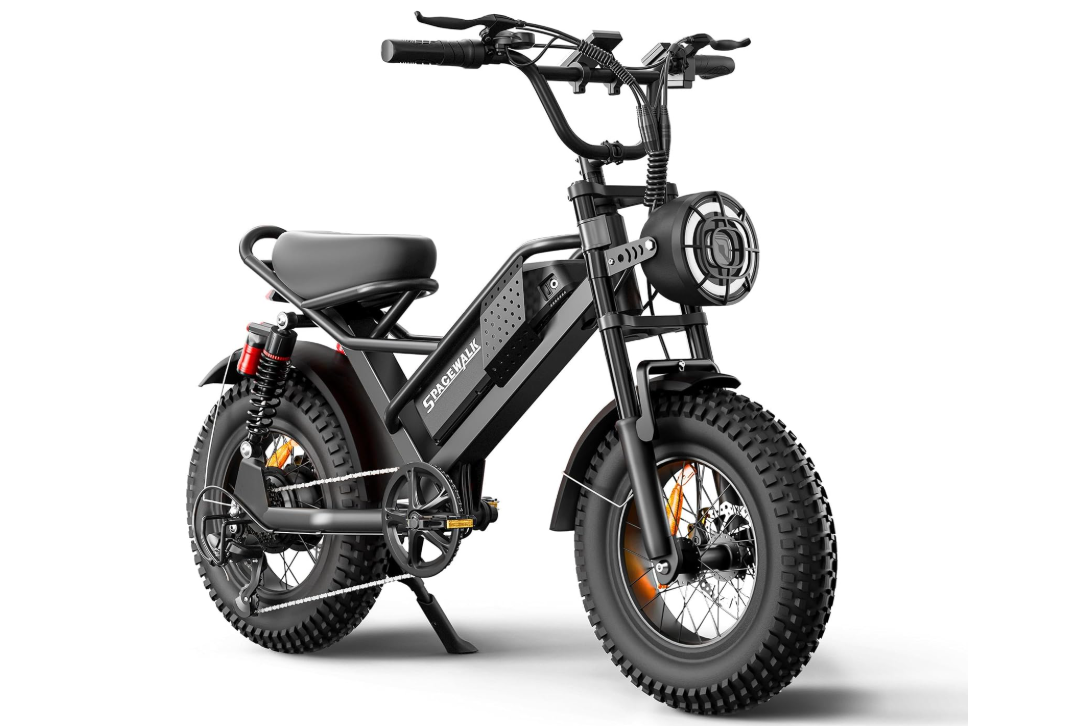
The term road legal electric bike can be confusing because it is used to describe two very different types of vehicle.
At one end of the spectrum is the everyday electric bicycle or EAPC (Electrically Assisted Pedal Cycle). These bikes provide assistance while you ride but are legally treated much like conventional bicycles. You don’t need road tax, registration, insurance or a driving licence.
At the other end are much faster electric mopeds and motorcycles. These can also be completely road legal, but they are motor vehicles rather than bicycles. That means registration, insurance, an appropriate driving licence and an approved motorcycle helmet become part of the package.
So, you absolutely can buy a road legal 30 mph electric bike in the UK. It just won’t normally be legally treated as an electric bicycle.
In this guide, I explain the difference between a road legal electric bicycle and a road legal electric motorbike, what you need to ride each one and what to look for when buying the best street legal electric bike for your needs.


What is a road legal electric bike in the UK?
For an electric bicycle to be treated in broadly the same way as a conventional bicycle in Great Britain, it needs to qualify as an Electrically Assisted Pedal Cycle (EAPC).
The key requirements are straightforward:
- It must have pedals capable of propelling the bicycle.
- The electric motor must have a maximum continuous rated power of no more than 250 watts.
- Electrical assistance must cut off once the bike reaches 15.5 mph (25 km/h).
- You must be 14 or older to ride one.
Meet those requirements and life is remarkably simple.
You don’t need to register the bike with the DVLA, you don’t need Vehicle Excise Duty, you don’t need motor insurance and you don’t need a driving licence. You can also use it on cycle paths and anywhere else conventional bicycles are legally allowed. Below are links to several street legal electric bicycles.
- Hygge Vester Electric Bike Review: A Fat-Tyre Folding E-Bike for British Roads?
- Best Electric Trikes for Adults in 2026: Top Electric Tricycles for Comfort, Stability and Everyday Riding
- HEADEER BK20 Electric Bike Review: A Powerful Fat Tyre eBike for Urban Riding and Off-Road Adventures
- Dawes Elegance Electric Bike Review: A Stylish Low-Step E-Bike for Town Riding
- Hygge Sorø All-Terrain Folding E-Bike Review: Fat Tyres, Full Suspension and 80km Range
Best street legal electric bike
The Hitway Brand is a good value, good quality option.


For most riders, I’d recommend sticking with a reputable 250W EAPC from an established manufacturer.
You’ve got more than enough assistance for commuting and hill climbing without turning what should be a simple bicycle into a motor vehicle with all the associated licensing, insurance and registration requirements.
Can a road legal electric bicycle go faster than 15.5 mph?
Yes—and this causes quite a lot of confusion.
The 15.5 mph restriction applies to motor assistance, not the actual speed of the bicycle.
You can pedal an EAPC at 20, 25 or even 30 mph downhill if you’ve got the legs, gravity or a sufficiently strong tailwind behind you!
The important point is that the motor must stop assisting you once you reach 15.5 mph.
So don’t interpret “15.5 mph electric bike” as meaning the bicycle itself is physically incapable of going any faster.
What is a street legal electric bike?
You’ll often see the American terminology street legal electric bike or street legal electric bicycle used by manufacturers and online retailers.
In the UK, “road legal” is generally the more useful term.
If the product is being sold as an electric bicycle for ordinary UK road use, check that it meets the EAPC requirements rather than simply relying on a retailer describing it as “street legal”.
I’d particularly check the continuous rated motor power and assisted speed.
A 750W electric bike might be perfectly legal as a bicycle in parts of the United States but it does not meet the normal 250W EAPC requirements for use as a conventional electric bicycle in Great Britain. The links below are examples of road legal electric bicycles in the UK.
What happens if my electric bike exceeds 250W or 15.5 mph?
This is where we cross the line between an electric bicycle and a motor vehicle.
If the motor has a continuous rated output above 250W or can continue propelling the bicycle beyond 15.5 mph, it doesn’t qualify as an EAPC under the standard rules.
Likewise, removing pedals capable of propelling the bike takes it outside the EAPC definition.
That doesn’t necessarily mean the vehicle itself is illegal.
It means it has to meet the appropriate requirements for a motorcycle or moped if you want to use it on public roads.
And that’s a very different proposition.
Are 30 mph electric bikes road legal in the UK?
Yes, potentially.
But a road legal 30 mph electric bike isn’t going to qualify as an ordinary EAPC if its motor is powering it at 30 mph.
Instead, you’re looking at a motor vehicle.
A moped in the AM category has a maximum design speed of up to 45 km/h or approximately 28 mph and, for an electric vehicle, power of up to 4kW. The minimum rider age is 16. Go beyond the moped category and you’re entering motorcycle categories with different power and licence requirements.
This distinction is particularly important when shopping online.
A seller advertising a “30 mph electric bike” doesn’t automatically mean you can take it out of the box and legally ride it down the road.
It needs to be appropriately approved and registered for road use, and you need to satisfy the relevant requirements for riding it.
Road legal 30 mph electric bike
If you specifically want around 30 mph of electrically powered speed, I’d look for a properly approved and registered electric moped, like the Hideos B6 rather than trying to derestrict an ordinary e-Bike. Examples of electric motor bikes are provided below:


What is a road legal electric motorbike?
A road legal electric motorbike is essentially subject to motorcycle rules just like a petrol motorcycle.
The fact that its motor is powered by batteries rather than petrol doesn’t turn it into an electric bicycle.
Depending on power and performance, electric motorcycles fall within the appropriate moped or motorcycle licensing categories.
The main categories include:
| Category | Typical vehicle | Minimum age | Power/speed |
|---|---|---|---|
| AM | Moped | 16 | Up to 45 km/h (28 mph), up to 4kW |
| A1 | Light motorcycle | 17 | Up to 11kW |
| A2 | Standard motorcycle | 19 | Up to 35kW |
| A | Unrestricted motorcycle | 21 progressive / 24 direct | Unrestricted subject to licence route |
Electric motorcycles are assessed using their continuous power rating rather than engine capacity.
Electric motorbike for adults road legal
For an adult wanting something substantially faster than an EAPC for commuting, a proper electric motorcycle makes far more sense to me than buying an overpowered bicycle and then trying to work out whether you can legally use it.
Do road legal electric motorcycles need tax?
Yes, if the vehicle is legally a motorcycle or moped rather than an EAPC, it needs to be registered and taxed for road use.
That is one of the biggest distinctions between the two categories.
A compliant EAPC doesn’t need Vehicle Excise Duty.
An electric motorcycle is a motor vehicle and therefore falls within the motor-vehicle registration and taxation system.
Do road legal electric motorcycles need insurance?
Yes.
You need appropriate motor insurance to use an electric motorcycle or moped on public roads.
This also applies to those very powerful electric “bikes” that look like bicycles but exceed the EAPC limits and are legally motor vehicles.
The government explicitly warns that an uninsured high-powered electric bike being ridden as a motor vehicle can result in enforcement action, including the vehicle potentially being seized.
Do I need a licence to ride a road legal electric motorbike?
Yes.
The licence you need depends on the category of motorcycle.
You can ride an AM-category moped from 16, an A1 light motorcycle from 17 and an A2 motorcycle from 19. An unrestricted Category A licence is available through direct access from 24 or progressive access from 21 if you’ve held A2 for at least two years.
New riders will generally start with a provisional licence and Compulsory Basic Training (CBT) before riding on public roads, subject to the detailed rules applying to their licence and vehicle.
So this is very different from jumping on an EAPC, where you simply need to be 14 or older.
Do you need a helmet on an electric motorbike?
Yes.
An approved motorcycle helmet is legally required when riding a motorcycle or moped on public roads.
A compliant EAPC is different. There is no general legal requirement to wear a cycle helmet, although personally I would always wear one.
What is the fastest street legal electric bike in the UK?
Technically, there isn’t one simple answer because once you move beyond EAPC territory, you’re dealing with different categories of motor vehicle.
If by fastest street legal electric bike you mean an electric bicycle that can be used like an ordinary bicycle without registration, tax, insurance or a driving license, motor assistance is limited to 15.5 mph.
If you mean an electric two-wheeler that’s legally permitted on the road, then electric motorcycles can travel considerably faster—but they need to meet motorcycle approval, registration, insurance and licensing requirements.
Fastest street legal electric bike
[INSERT HIGH-PERFORMANCE ROAD-LEGAL ELECTRIC MOTORCYCLE + LINK]
This is why I’d be wary of online articles promising the “fastest road legal e-Bike” without explaining whether they’re talking about an EAPC, moped or motorcycle.
Can I derestrict my 15.5 mph electric bike?
You might physically be able to. Legally, that’s another matter.
The government specifically warns about modifications and “dongles” used to make EAPCs exceed the 15.5 mph assistance or 250W continuous-power limits.
Once modified beyond the EAPC limits, the bike becomes a motor vehicle in law. Using an unregistered and uninsured modified bike on public roads can therefore result in fines, penalty points and potentially having the bike impounded.
There’s also another interesting trap.
Some electric bikes have an “off-road mode” that unlocks additional motor speed. Government guidance says vehicles with a mode allowing the motor to propel them above 15.5 mph do not, in its view, comply with EAPC regulations and are considered motor vehicles.
So don’t assume that having a little button that switches the extra speed off automatically makes a high-powered bike road legal as an EAPC.
Road legal electric bicycle vs road legal electric motorcycle
Here’s the simplest way to understand the difference:
| Requirement | Road Legal EAPC | Electric Moped/Motorcycle |
|---|---|---|
| Pedals | Required | Not necessarily |
| Motor assistance | Cuts out at 15.5 mph | Can exceed 15.5 mph |
| EAPC motor limit | 250W continuous | Higher power permitted according to category |
| Minimum age | 14 | Typically 16+ depending on category |
| Driving licence | No | Yes |
| CBT | No | Normally required for learners |
| Registration | No | Yes |
| Vehicle tax | No | Yes |
| Motor insurance | No | Yes |
| Motorcycle helmet | No | Yes |
| Cycle lanes | Yes, where bicycles permitted | No |
| Roads | Yes | Yes, subject to vehicle/licence rules |
The important thing is that both can be road legal.
They are simply road legal under completely different sets of rules.
Which should I buy: a road legal electric bike or electric motorbike?
For most people looking for an alternative to a bicycle, I’d choose an EAPC.
A street legal electric bicycle gives you electrical assistance without introducing the expense and bureaucracy associated with a motor vehicle. You can use cycle lanes, don’t need insurance or tax and can ride from age 14.
If you’re regularly commuting longer distances on roads, however, the attraction of a faster electric moped or motorcycle is obvious.
A road legal 30 mph electric bike or electric moped allows you to travel much closer to normal urban traffic speeds, while larger electric motorcycles can comfortably handle faster roads.
You’re essentially choosing between an electrically assisted bicycle and an electric motor vehicle.
Once you understand that distinction, UK electric bike law becomes considerably easier to navigate.