
 By kazimladimeji
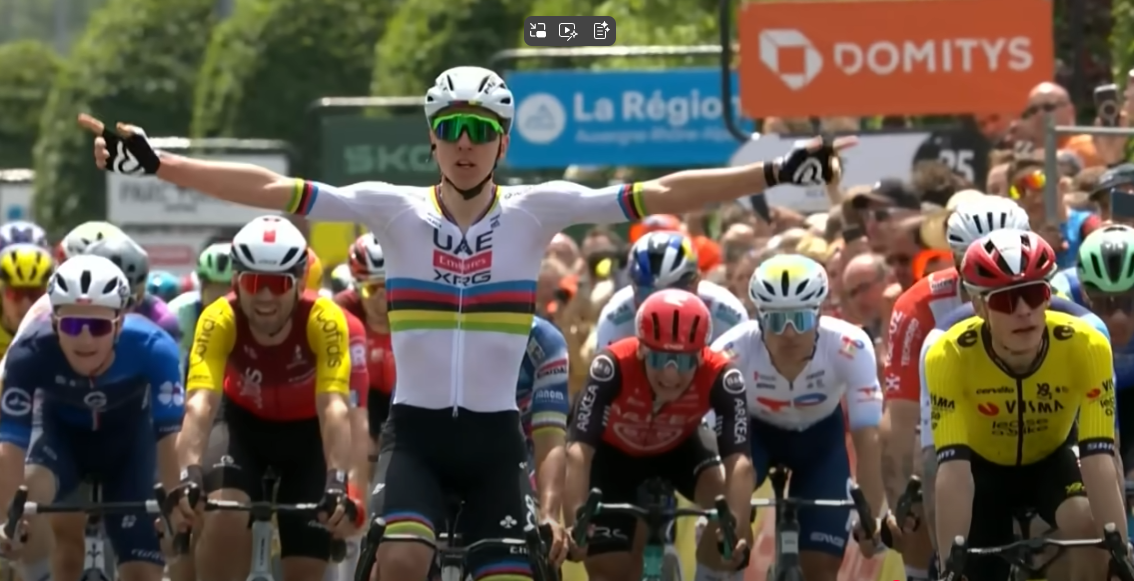
The route gives Remco Evenepoel a substantial time-trial opportunity, but the Alps and Pyrenees still leave Tadej Pogačar plenty of ways to take time back. Isaac del Toro and Paul Seixas have the credentials to contend; the long time trials are the big question.
The route was unveiled on 22 October 2026. This is a route-fit assessment based on the announced course and the 2026 Tour’s final classification. It is not a prediction, and none of the riders discussed here is confirmed for the 2027 start.
The 114th Tour de France runs from 2 to 25 July 2027. It starts in Edinburgh, crosses England and Wales, then heads to France for a 3,479-kilometre race. The headline statistic is 71 kilometres of individual time trialling, the longest total since 2012. But there are also six mountain stages, three summit finishes and 53,450 metres of stated climbing. That combination makes the route unusually balanced: it rewards a strong time trial, then asks the contenders to survive and attack across several very different mountain blocks.
Quick verdict: this route is more favourable to Evenepoel than a mountain-heavy Tour with little time trialling. It is not Pogačar-proof. The defending champion can limit losses against the clock and has multiple hard mountain days on which to attack. For del Toro and Seixas, the route is a test of how much time they can keep out of Evenepoel’s hands before the high mountains.

At a glance
- Dates: 2–25 July 2027
- Distance: 3,479km, before homologation
- Stages: 21, plus three rest days
- Time trials: 38km on stage 7 and 33km on stage 16; 71km total
- Mountain stages: six, with summit finishes at the Grand Colombier, Les Saisies and Col du Portet
- Climbing: 53,450m
- Highest point: Col du Portet, 2,215m
These figures and stage classifications come from the official Tour route page. ASO says the route visits the Massif Central, Jura, Alps and Pyrenees in that order.
The route, stage by stage
| Stage | Date | Route | Distance | Type |
|---|---|---|---|---|
| 1 | Fri 2 July | Edinburgh–Carlisle | 185km | Flat |
| 2 | Sat 3 July | Keswick–Liverpool | 223km | Hilly |
| 3 | Sun 4 July | Welshpool–Cardiff | 223km | Hilly |
| — | Mon 5 July | Rest day, Cherbourg-en-Cotentin | — | Rest |
| 4 | Tue 6 July | Cherbourg-en-Cotentin circuit | 171km | Hilly |
| 5 | Wed 7 July | Pontorson–Plumelec | 178km | Hilly |
| 6 | Thu 8 July | Vannes–Angers | 193km | Hilly |
| 7 | Fri 9 July | Blois–Chambord | 38km | Individual time trial |
| 8 | Sat 10 July | Bourges–Le Creusot | 224km | Hilly |
| 9 | Sun 11 July | Villars-les-Dombes–Grand Colombier | 162km | Mountain |
| — | Mon 12 July | Rest day, Haute-Savoie | — | Rest |
| 10 | Tue 13 July | Annecy–Sallanches | 171km | Mountain |
| 11 | Wed 14 July | Cluses–Les Saisies | 150km | Mountain |
| 12 | Thu 15 July | Chambéry–Valence | 162km | Flat |
| 13 | Fri 16 July | Aubenas–Montpellier | 164km | Flat |
| 14 | Sat 17 July | Montpellier–Mende | 199km | Mountain |
| 15 | Sun 18 July | Rodez–Albi | 169km | Hilly |
| — | Mon 19 July | Rest day, Toulouse | — | Rest |
| 16 | Tue 20 July | Toulouse individual time trial | 33km | Individual time trial |
| 17 | Wed 21 July | Muret–Pau | 186km | Flat |
| 18 | Thu 22 July | Pau–Saint-Lary-Soulan, Col du Portet | 174km | Mountain |
| 19 | Fri 23 July | Hasparren–Laruns | 160km | Mountain |
| 20 | Sat 24 July | Maubourguet–Libourne | 198km | Flat |
| 21 | Sun 25 July | Saint-Quentin-en-Yvelines–Paris Champs-Élysées | 116km | Flat |
Stage dates, distances, towns and classifications follow the official route listing. Distances and details remain subject to final homologation and later organiser updates.
Where the Tour could be won
Stage 7: a first major time-trial reckoning
The 38km Blois–Chambord time trial is the longest of the two tests. A specialist who is also a Grand Tour contender can build a meaningful buffer here, especially against climbers who are less comfortable riding alone. It arrives before the first mountain stage, so it could shape how teams approach the Grand Colombier: some will need to attack, while others may be able to defend.
Stage 9 and the Alpine block
The first mountain stage finishes on the Grand Colombier after 162km. It is followed, after a rest day, by Annecy–Sallanches and then Cluses–Les Saisies. The official route classifies all three as mountain stages, and stage 11 includes 4,750 metres of elevation gain on the published profile. This is a demanding three-day sequence for anyone who has spent energy trying to gain time earlier.
Stage 14: Mende after a long day
The 199km Montpellier–Mende stage is classified as mountainous. It provides another opportunity to put pressure on rivals after a stretch with flatter stages, before the second time trial. Teams may try to make it a hard day from a long way out, but that is tactical speculation rather than a certainty about how the stage will unfold.
Stage 16: a second clock test in Toulouse
The 33km Toulouse time trial is shorter than stage 7 but still long enough to move the general classification. Its position is crucial: it comes just before the final Pyrenean block. Riders who lose time here may have to take risks on stages 18 and 19; riders who gain time can use the mountains to defend.
Stages 18 and 19: the Pyrenees decide the late race
The Col du Portet is the summit finish on stage 18 and the highest point of the Tour at 2,215 metres. The next day, Hasparren–Laruns is another mountain stage. Together they give the strongest climbers two consecutive chances to attack, and leave little time to recover before the race heads towards its final flat stage and Paris.
Is this route Pogačar-proof?
No. The long time trials make the route more welcoming to Evenepoel than a Tour built around repeated summit finishes and minimal time against the clock. But “Pogačar-proof” would mean leaving the champion with too few opportunities to respond. This route does the opposite: six mountain stages, three summit finishes and a particularly hard final Pyrenean pair give a top climber a substantial platform to win time back.
The 71km against the clock matters, but it is not a guarantee of a large Evenepoel lead. Pogačar has shown he can time trial at the highest level. In the 2026 Tour’s 26.1km stage-16 time trial, Evenepoel won and was 28 seconds faster than Pogačar, according to the Reuters report. That is evidence of Evenepoel’s strength, not proof that he can take several minutes from Pogačar over 71km.
The final outcome will also depend on the exact profiles, weather, team strength, form and race incidents. The route establishes where the opportunities are; it cannot tell us who will take them.
How could the route suit the main names?
The riders below finished first, second, third and fourth in the 2026 Tour, respectively, according to the official Tour classification. Those results make them useful reference points, but they do not confirm any rider’s 2027 participation or form.
Tadej Pogačar: still the benchmark
Pogačar won the 2026 Tour by 6:26 over Evenepoel. The route gives him plenty of climbing on which to apply pressure, including the Grand Colombier, the Alpine block and the high-altitude Col du Portet. He would not need to dominate the time trials if he can keep the deficit manageable and then create differences in the mountains. The open question is how much time he gives away before those stages.
Remco Evenepoel: the clearest route beneficiary
Evenepoel’s best route argument is obvious: 71km of time trialling is a rare amount, and two tests offer two chances to use his specialist strength. The difficulty is that he finished 6:26 behind Pogačar in 2026. He would likely need to convert the time trials into a real advantage, then limit losses on the hardest mountain days. The course makes that scenario more plausible; it does not make it automatic.
Isaac del Toro: podium threat, with a clock-time question
Del Toro placed third in 2026, 9:42 behind Pogačar, showing he can sustain a high level across three weeks. On this route, the long individual time trials look like the main obstacle. His challenge would be to keep the gap manageable against the clock and use his climbing and team support in the mountain stages. He is a credible contender on the evidence of 2026, but his 2027 role and start are not yet confirmed.
Paul Seixas: huge promise, and a different kind of test
Seixas finished fourth on his Tour debut in 2026, 11:56 down. That is an exceptional first result, but the 2027 route asks him to repeat that level across another demanding three-week race, including 71km of time trials. The route could reward his climbing, while the clock tests whether he can stay close to Evenepoel. At this stage, the fairest description is a serious emerging contender rather than a confirmed favourite.
What to watch for
- Time-trial gaps: Compare the leading contenders after both stages 7 and 16, not just after the first test.
- How teams use the British opening: The first three stages cover Scotland, England and Wales. Stage 3 is officially hilly, 223km long and listed with 3,000m of elevation gain, so it could create early selection before France.
- The Alpine sequence: Stage 11 carries 4,750m of elevation gain on the official profile. That can make the three-stage mountain block more consequential than a single summit finish.
- The post-TT Pyrenees: The final two mountain stages come after the Toulouse time trial. Watch whether riders who lose time on the clock respond with early attacks or wait for the Col du Portet.
Bottom line
The 2027 route is a rare opportunity for a time-trial specialist to shape the Tour, and Evenepoel has a strong case to benefit most from the design. But Pogačar remains the rider to beat: the course has enough climbing, enough summit finishes and enough difficulty late in the race to reward his all-round strength. Del Toro and Seixas have shown enough to be taken seriously, though each faces a substantial test against the clock and over three weeks.
So the short answer is: more Evenepoel-friendly, not Pogačar-proof. The decisive question will be whether the time-trial advantage is large enough to survive the mountains.
Sources
- Tour de France 2027 official route, stages and key figures
- Tour de France: 2027 Grand Départ in Great Britain
- Tour de France official rankings (2026 final general classification)
- Reuters: Evenepoel wins 2026 Tour time trial, 21 July 2026